
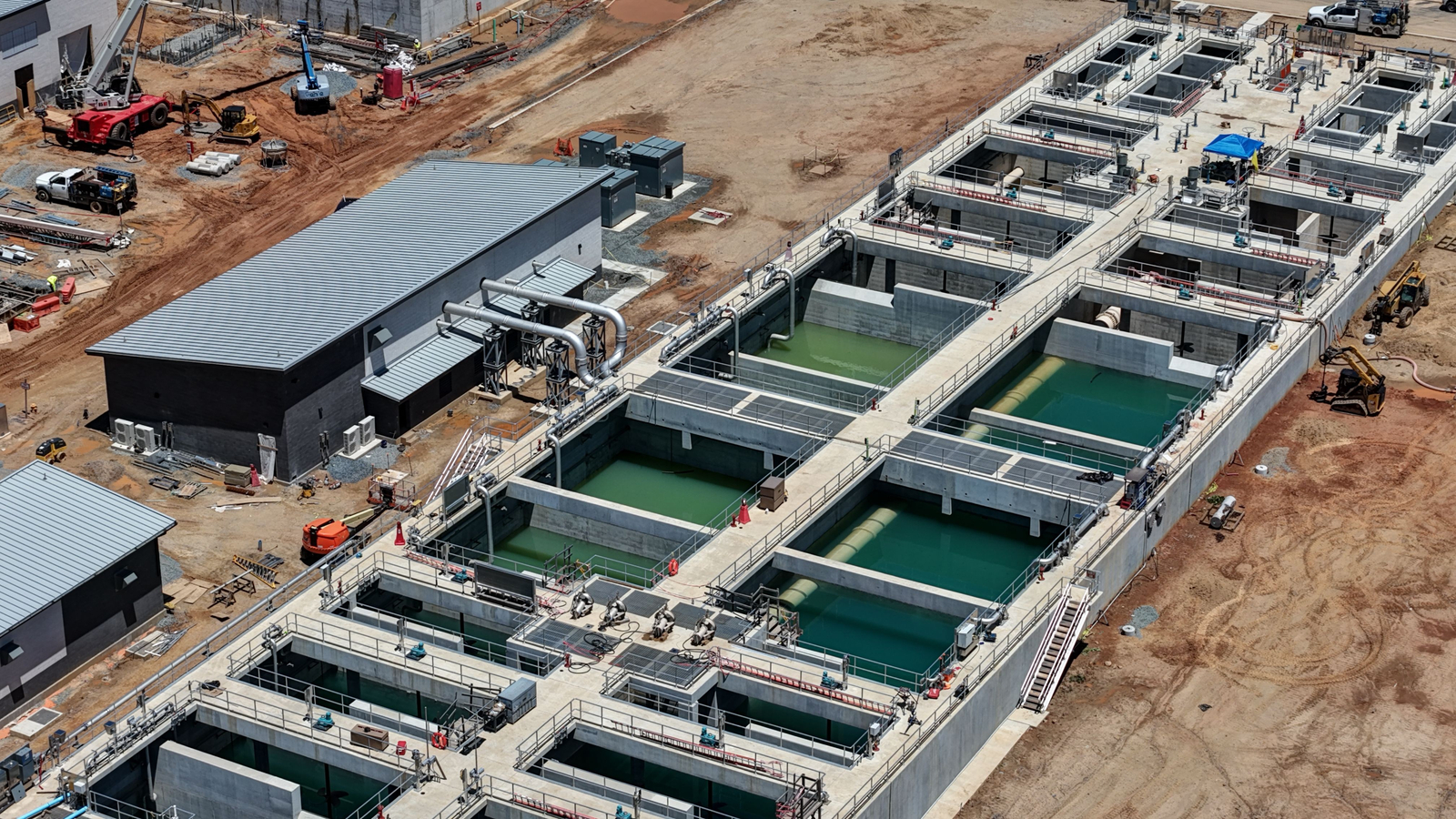
Our previous newsletter followed wastewater beneath Long Creek and into the Stowe Regional Water Resource Recovery Facility. This month, we explore biological nutrient removal and the treatment processes that separate solids, filter the water, and prepare it for discharge.
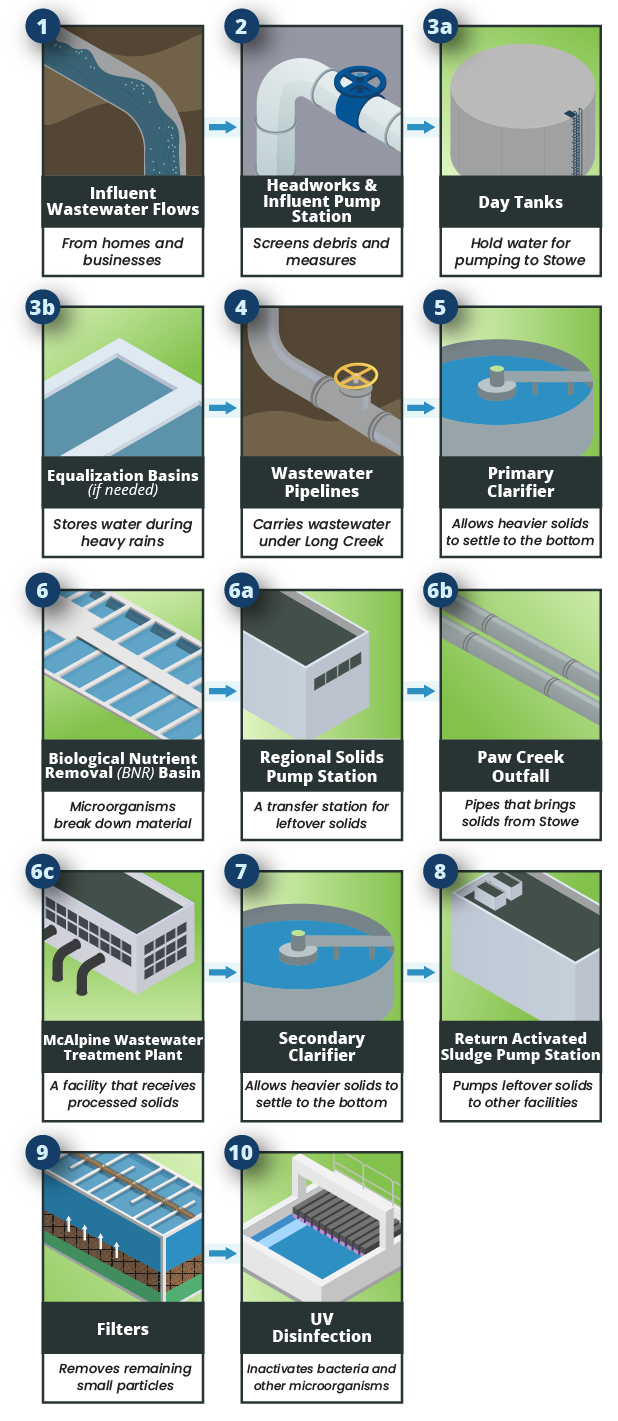
After passing through the Primary Clarifier, wastewater enters the Biological Nutrient Removal (BNR) Basin. This process uses naturally occurring microorganisms to help remove pollutants from the water before it continues through the treatment system.
The BNR Basin at Stowe uses a multi-stage treatment process designed to reduce nutrients such as nitrogen and phosphorus. If left untreated, excess nutrients can negatively impact rivers, lakes, and aquatic ecosystems. By creating carefully controlled treatment conditions, the facility allows beneficial microorganisms to break down organic material and remove these nutrients from the wastewater.
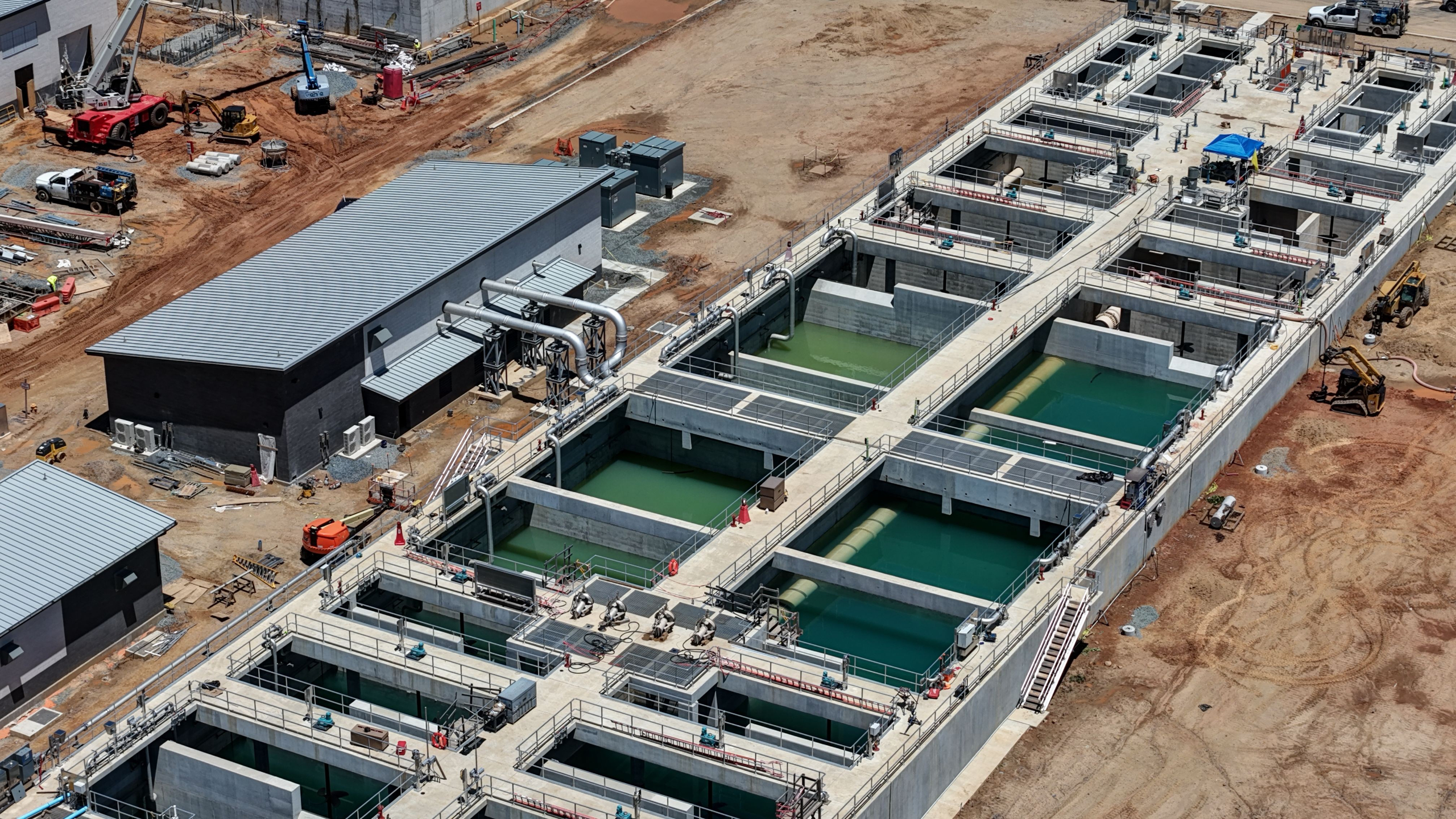
One of the technologies incorporated into the Stowe facility is Densified Activated Sludge (DAS). This advanced process encourages the formation of dense biological particles that settle more efficiently than those found in conventional treatment systems. The result is improved treatment performance while reducing the amount of infrastructure, energy, and resources needed to achieve high water quality standards.
The next stages of wastewater treatment focus on separating solids, removing remaining particles, and preparing the water for final treatment.
After leaving the Biological Nutrient Removal Basin, wastewater enters the Clarifier, where water and biological solids are separated. Inside these large circular basins, the flow slows significantly, allowing biological solids to settle naturally to the bottom while clearer water remains near the surface and moves forward in the treatment process.
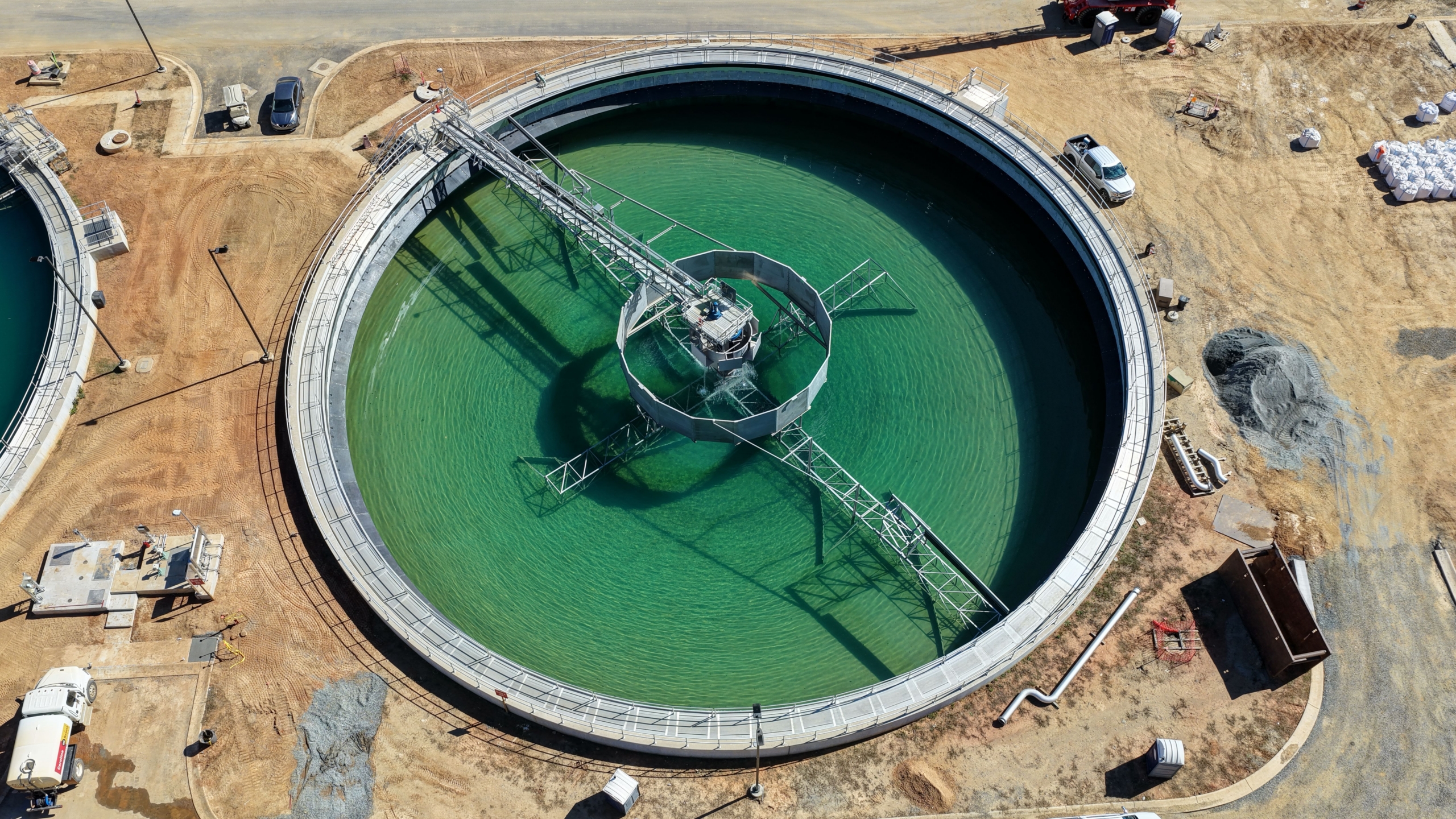
The solids that settle in the Clarifier still have an important role to play. The Return Activated Sludge Pump Station returns a portion of the settled solids, which contain beneficial microorganisms, to the Biological Nutrient Removal Basin. Recycling these microorganisms helps sustain the biological treatment process and supports consistent treatment performance.
Not all settled solids are returned to the Biological Nutrient Removal Basin. The remaining solids are managed through the Regional Solids Pump Station. Unlike some treatment facilities, Stowe will not perform solids treatment onsite. Instead, these solids are transferred to Charlotte Water’s regional solids management system for further processing at other facilities.
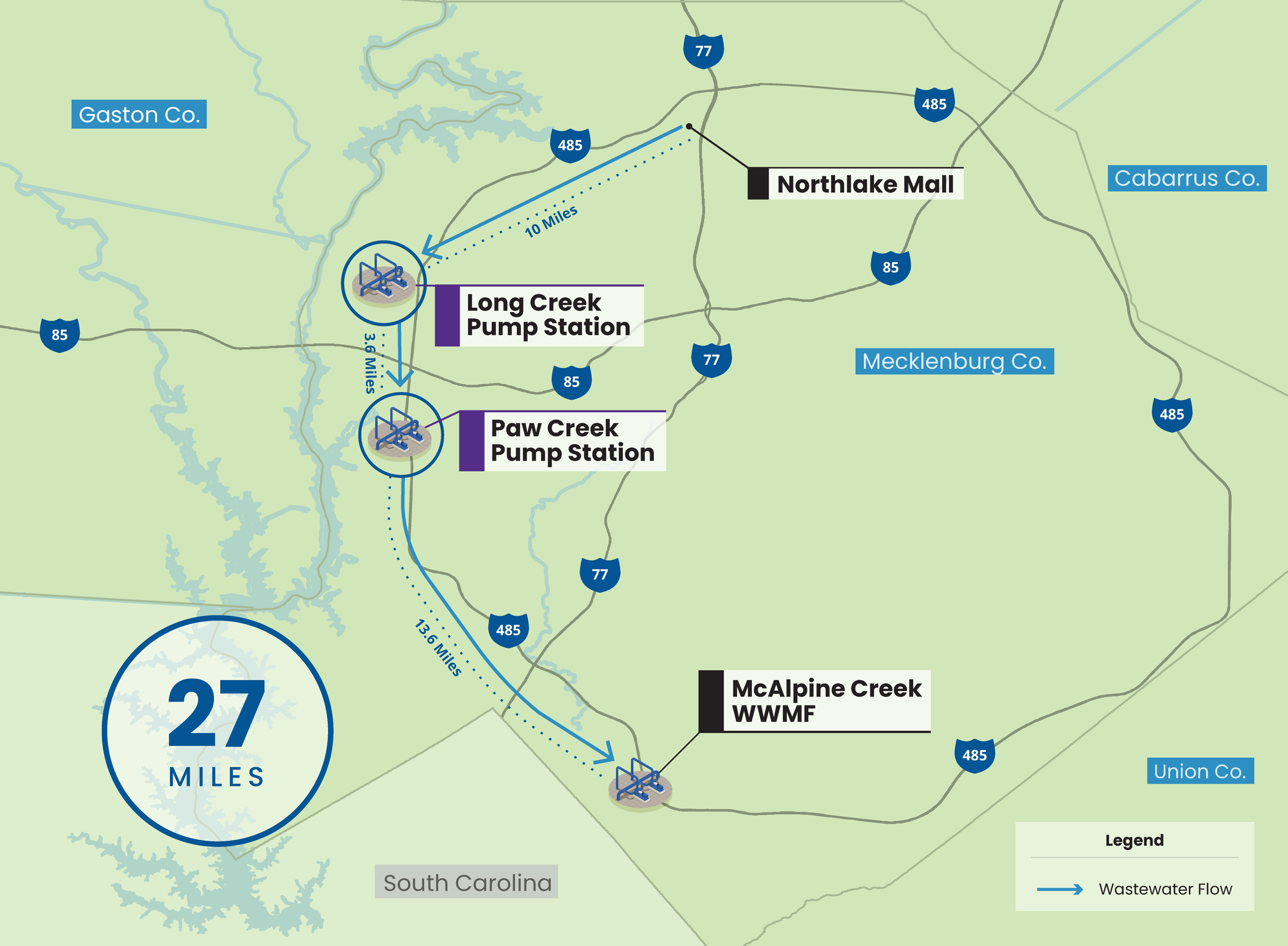
As part of Charlotte Water’s regional wastewater system, the Stowe facility also connects to infrastructure that supports wastewater conveyance and solids management throughout the service area. The Paw Creek Pump Station and connections to the McAlpine Creek Wastewater Management Facility help integrate Stowe into the broader regional system, supporting the efficient movement and management of wastewater and solids across multiple facilities.
Once the water has been separated from the solids, it moves on to filtration.
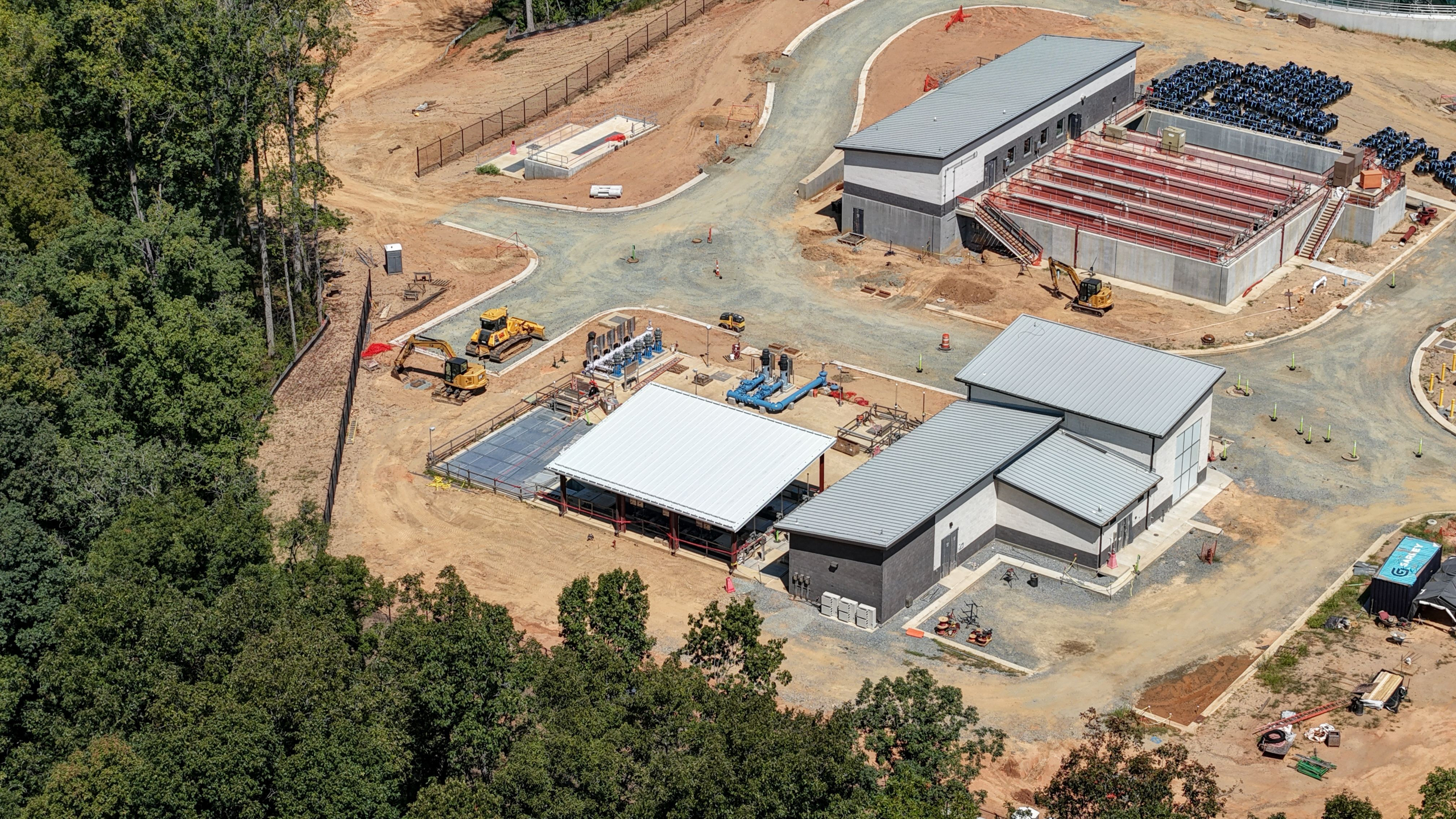
As water passes through the filters, remaining fine particles are removed. Filtration provides an additional layer of treatment that helps improve water quality before the water moves to disinfection.
Next, the water enters the UV disinfection system. UV treatment uses ultraviolet light to inactivate bacteria and other microorganisms that may still be present in the water.
Together, the Secondary Clarifier, Return Activated Sludge Pump Station, filtration system, and UV disinfection process provide several important layers of treatment as the water approaches the end of its journey through the Stowe Regional Water Resource Recovery Facility.
In the next Follow the Flow installment, we will conclude the series by exploring water quality testing and the discharge process that safely returns treated water to the river.